Johann Christoph Schmidt and His Time

The following text is the foreword written by Dr. Reiner Zimmermann in 2021 for the publication of the five overtures by Johann Christoph Schmidt, issued by Ries & Erler Verlag in Berlin. It provides valuable information about the historical period in which this court composer was active, as well as about his life and work — at a time when this Dresden composer is almost entirely unknown.
In preparation for the first modern revival of the opéra-ballet Fastnachts-Lust, I have transcribed this foreword here.
Johann Christoph Schmidt (1664–1728) was one of the least known Kapellmeisters of the Dresden court orchestra. As a Protestant musician, he found himself caught up in the political and administrative turmoil caused by Elector Friedrich August I’s conversion to Catholicism — a ruler who personally favoured Catholic church music. He also belonged to the so-called “Lullists,” the French-oriented musicians at the Dresden court, who were increasingly overshadowed from 1717 onwards by the “Italians” (a development to which Dresden’s music historiography and performance practice have devoted almost exclusive attention). Finally, most of his compositions were lost in 1760 when Prussian troops set fire to the prince’s palace in the Pirna suburb, thereby destroying the surviving legacy of seventeenth-century Protestant church music in Dresden.
When Heinrich Schütz died in 1672, Johann Christoph Schmidt, born on 6 August 1664 in Hohnstein in Saxon Switzerland, was eight years old. His father, who had once been a choirboy under Schütz, passed on his knowledge as an organist and teacher in Hohnstein and raised his musically gifted sons in the tradition of Dresden’s Protestant church music. Schmidt attended the Gymnasium zum Heiligen Kreuz in Dresden as a scholarship pupil and, two years later, entered the service of Elector Johann Georg II as a choirboy and instrumentalist.

Christian Weise 
Christian-Weise-Gymnasium in Zittau
From 1681 to 1683 he studied at the Old Gymnasium in Zittau under Christian Weise and took part in the school’s theatrical performances. After studying at the University of Leipzig, he was appointed preceptor of the court choirboys at the Dresden court in 1687. The incumbent Kapellmeister, Christoph Bernhard, under whom he worked as a gambist and organist, gave him composition lessons. Works for liturgical use were composed during this period. In 1692, following Bernhard’s death, Schmidt rose to the position of second court organist. Elector Johann Georg IV granted him a scholarship for a study trip to Italy in 1693/94. After the performance of the opéra-ballet Musesfest (16 February 1696), Kapellmeister Nicolaus Adam Strunck recommended him for the post of Vice-Kapellmeister of the court orchestra, combined with the position of chamber organist. In April 1697, Strunck lost his position along with thirteen other court musicians (who were re-employed in June), in parallel with the dismissal of the entire court household. This was because August wanted a free hand in his personnel decisions for his personal court establishment in Warsaw, following his coronation as King of Poland in Kraków on 15 September 1697. Schmidt witnessed the coronation and returned to Dresden to recruit further musicians for the new Royal Polish Kapelle.
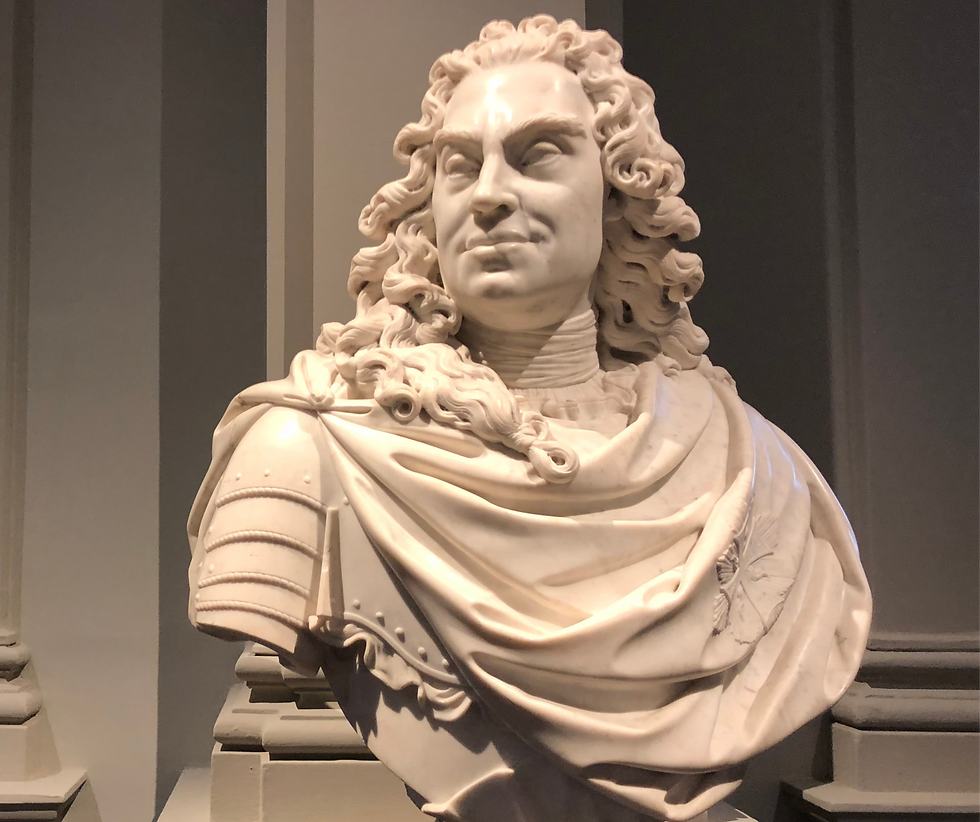
On 1 October 1697, Johann Christoph Schmidt was appointed Kapellmeister of the Royal Polish Kapelle together with fifteen other musicians and was sent to Warsaw. He did, however, request permission to travel to Dresden twice a year. In the following year, the ensemble was expanded to 41 members with the addition of Italian and Polish musicians. Nevertheless, there remained a continuing need in Dresden to provide Protestant church music for the Electress and the court, which was increasingly performed by members of the court orchestra and six choirboys.
In August 1699, August returned to Dresden with his court and musicians, whereupon the Kapelle was divided: one part remained in Warsaw, while the section that stayed in Dresden was responsible for the Catholic services held in the chapel of Schloss Moritzburg, which August attended whenever he resided in Dresden. Johann Christoph Schmidt directed the Protestant church music in the palace church and was also responsible for the musical education of the choirboys.
In 1700, August embarked on the ultimately futile military adventure of the Great Northern War against Charles XII of Sweden. As a result, he evacuated his court from Warsaw in May 1702 and lost the Polish crown in 1704. He was replaced by Stanisław Leszczyński (1677–1766), King of Poland by the grace of Charles. Between 1706 and 1707, Leszczyński stayed at Mildenstein Castle in Leisnig in the Freiberg Mulde valley with approximately 1,000 people and 400 horses, only about 70 kilometres from Dresden. On 27 October 1706, he signed the humiliating Treaty of Altranstädt there, renouncing the Polish crown.
Presumably in order to conceal the defeat in Warsaw, August had his Warsaw musicians perform in Protestant services in Dresden between September 1702 and 1704 as well. Contemporary accounts note that “in the mornings and afternoons Kapellmeister Schmidt, together with the royal musicians and castrati present, performed very pleasant music.” In April 1707 the Royal Polish Kapelle was dissolved because 47,750 talers in salaries could no longer be paid. Nevertheless, the musicians remained in service and could be reassigned to new tasks.
Between 1707 and 1709, August sought Russian support at various European courts in order to regain the Polish crown. He also sought the assistance of King Frederick IV of Denmark, for whom a great festival was prepared in Dresden in May/June 1709. Sixty trumpeters, ten pairs of timpani, and 84 other musicians — only some of whom came from Dresden — performed. On this occasion, on 26 May in Pillnitz, the Kapellmeister presented the divertissement Le Théâtre des Plaisirs to a text by Angelo Constantini. A French theatrical troupe engaged in July 1708 and an Italian troupe also took part. Kapellmeister Schmidt almost certainly contributed compositions for these events as well.
In order to win the Pope’s favour, August had the old opera house converted into the Catholic court church in 1708 and issued detailed regulations in a “Règlement du Roi pour l’Eglise et Chapelle Royale ouverte aux Catholiques” for the formation of a church music ensemble consisting of six singers and four instrumentalists under the direction of a clerical music director. This group was to provide musical accompaniment for all Low Masses attended by the King, while the court orchestra was to play at all High Masses on Sundays and feast days. Occasionally, such spontaneous princely decrees were not fully thought through, leading to jurisdictional conflicts that required the King’s intervention. In this uncertain environment, Schmidt had to find his place as the responsible Kapellmeister — a task made no easier by the fact that August showed little personal interest in this church music.
Only after the defeat of the Swedes at Poltava by Russian troops under Tsar Peter I did August regain the Polish crown in July 1709. One month later, the financial arrangements for the court music were reorganised by drawing on funds from the general consumption tax — a measure that gave the Elector-King greater financial leeway against the will of the estates. The Protestant musical ensemble under Schmidt’s direction retained the structure it had had since 1698. At the same time, thanks to the restored political stability and with considerable organisational skill, he was able to form a so-called “orchestre” from the reinstated members of the court orchestra and additional musicians who played modern instruments. It consisted of chorally reinforced strings of the violin family, transverse flutes, oboes, and horns, as well as the full continuo group with bassoon, violoncello, violin, theorbo, harpsichord, and organ. He could also draw on his earlier opéra-ballet ensembles, since the court orchestra had already possessed a large wind and gamba ensemble, as well as violins, cellos, basses, and other instruments common at the time, before 1696.
By around 1710 the new orchestra was fully established. The trumpeters came from the group of court trumpeters with their silver trumpets, which belonged to Elector August in his capacity as Arch-Marshal of the Holy Roman Empire of the German Nation. In addition to church services, this orchestra also accompanied ballet and theatrical performances by the French troupe engaged in 1708 (six ladies and seven gentlemen, dancers and singers), before these musicians later took over the Italian repertoire. In doing so, Johann Christoph Schmidt established the reputation of the Dresden court orchestra as the most modern and finest orchestra in Europe — a reputation it would enjoy for decades to come under Hasse’s direction until the end of the Augustan era.
Due to August’s preference for French taste at court, the French goût dominated the court orchestra between 1709 and 1717. It was represented by the Dutch violinist Jean-Baptiste Volumier, trained in Versailles, who nevertheless cultivated a broad Italian repertoire; the French flautist Pierre-Gabriel Buffardin; and Johann Christoph Schmidt. Together they shaped the style of the court orchestra as the “Lullists” and were supported by other accomplished instrumentalists, including Pantaleon Hebenstreit (inventor of the Pantalon, a large form of the dulcimer) and Jan Dismas Zelenka, who worked as a double bassist, composer, and pupil of Schmidt.
In 1714, Schmidt was able to accompany Crown Prince Friedrich August on his grand tour to Versailles, together with Jean-Baptiste Volumier, Johann Georg Pisendel, Christian Pätzold, and other chamber musicians, and to experience music at the court of Louis XIV at first hand.
Schmidt himself was also well acquainted with the Italian style after his period of study in Italy, as can be seen from his divertimento teatrale Latona in Delo, performed in Warsaw in 1699. The stylistic orientation was therefore not a matter for the King, but depended on the personal preferences of the ruler.
In 1717, Schmidt was appointed Oberkapellmeister at the Dresden court — one of the few German composers and orchestra directors to receive this very high distinction, especially considering that he had already passed the zenith of his creative output. From September 1717 onwards, the Italians set the tone. At the request of the Crown Prince (the future Elector Friedrich August II), who had developed a passion for Venetian music during his grand tour in Venice, Antonio Lotti arrived in Dresden with his wife, the prima donna Santa Stella Lotti, the castrato Senesino, Margherita Durastanti, Vittoria Tesi, and the violin virtuoso Francesco Maria Veracini, in order to establish Venetian music in Dresden as well. Together with Pisendel and Johann David Heinichen, who also came from Venice and were appointed Kapellmeisters alongside Schmidt, the representatives of the Italian gusto gained precedence over those of the French style, thanks to the Crown Prince’s patronage. This led to conflicts between the “French” and the “Italians,” which eventually resulted in an artistic compromise known as the “mixed style.” The Elector had to intervene personally to prevent Herr Schmidt from interfering in matters concerning the Italian opera troupe.
For the wedding of the Crown Prince to the Habsburg Archduchess Maria Josepha in September 1719, Schmidt still composed an extensive French ballet-opera, Les quatre Saisons. However, until his death in 1728 there were no further opportunities to continue in his French-oriented style.
The five overtures are preserved in “Schrank No. II” of the instrumental repertoire of the early eighteenth-century court orchestra. The internal numbering of the cupboard (Nos. 1–3 and 6) provides no information about their date of composition. The consistent use of French instrumental designations, the scoring for two violins and two violas, and the use of French clefs all point to French models. Only Overture No. 6 prescribes a string ensemble in the Italian manner: two violins and one viola.
An examination of the watermarks by RISM suggests a date of composition between 1700 and 1720.
At the wedding of Alexei, son of Tsar Peter I, to Princess Charlotte Christine of Brunswick-Wolfenbüttel (who had been raised in Torgau) in October 1711 at Schloss Hartenfels, members of the court orchestra under Schmidt’s direction played for dancing — Schmidt’s overture suites may well have been composed for this occasion. In March 1714 he performed with a chamber ensemble at the wedding of Count Moritz of Saxony (son of August the Strong) and Maria Victoria Tugendreich von Loeben in Moritzburg. Shortly afterwards, Schmidt travelled to Versailles in the entourage of Crown Prince Friedrich August (II.) together with several chamber musicians, including Jean-Baptiste Volumier, Johann Georg Pisendel, and Christian Pätzold. It is likely that the Kapellmeister also brought some of his own court dances with him for these occasions.
The copyist of the parts in “Schranck No. II” has been identified as Johann Jacob Lindner (1653–1733). His manuscript parts for works by Jean-Baptiste Lully, André Campras, Schmidt, and the Stuttgart Kapellmeister Johann Christoph Pez can be dated to the years between 1710 and 1720. This points to a rebuilding of the court orchestra’s repertoire after 1709 and the creation of a new collection of works.
Overall, Overtures 1, 2, and 4 feature an Intrada in their opening movements, while the third overture has a double-choir structure with a Chaconne. This, too, may indicate the new manner of handling different instrumental groups that Schmidt had been developing since 1709. As long as no definitive documentary evidence exists, however, such considerations must remain speculative.
The first movement of Overture No. 6 survives in an anonymously transmitted manuscript that was identified in 2008 by Wolfgang Eckhardt as a work by Johann Christoph Schmidt, taken from his divertimento teatrale Latona in Delo of 1699.
The overture suite was a form of social music-making in the seventeenth and eighteenth centuries. It was based on the sequences of dance movements already common in the Renaissance, primarily for lutenists — a tradition that continued in Germany from the beginning of the seventeenth century through composers such as Paul Peuerl, Michael Praetorius, Melchior Franck, Johann Hermann Schein, Samuel Scheidt, and Johann Staden. From the sequence of Allemande, Courante, Sarabande, and Gigue favoured by French harpsichordists such as François Couperin and others, a standard form developed. Johann Sigismund Kusser, Georg Muffat, and Johann Caspar Ferdinand Fischer adopted French models to assemble individual orchestral movements from operas into overtures. In contrast to the three-movement Italian sinfonia (fast–slow–fast), France in the second half of the seventeenth century established the sequence of Air, Bourrée, Gavotte, and Ouverture as the norm. Lully had developed the overture into an imposing opening movement and had also adopted the Chaconne for the Ballet du cour. Johann Christoph Schmidt, however, did not merely follow the practice of Lully or Campra; in Overture No. 3, for example, he combined French forms with Italian ones. Alongside the overture and air, there are also an Intrada and a sinfonia. Both the overture, with its fugal second section, forms a self-contained suite together with the following Air 1 and Menuet, and the sinfonia, with its similarly fugal section, appears as a further sequence together with the Grand Air, Air II, and Chaconne. Although this cannot yet be regarded as an example of the later Dresden “mixed taste,” it nevertheless demonstrates Schmidt’s sovereign handling of the musical forms then in use and his tendency to draw on both stylistic traditions — a practice also adopted by other German composers. These overtures were performed at festivities and court balls of the electoral-royal court for social entertainment and met the requirements of Saxon court ceremonial.
The edition of the score is based on the performing parts preserved in the Saxon State and University Library Dresden (Sächsische Landesbibliothek – Staats- und Universitätsbibliothek Dresden).
I would like to thank the ensemble L’arpa festante and its director, Mr Christoph Hesse, for the insights and corrections gained during the recording for the cpo label, which have been incorporated into this edition.
Reiner Zimmermann
January 2021


Comments